Conservatory Cost UK
Estimate YOUR conservatory cost in 60 seconds — or check an existing quote against fair UK rates.
Estimates based on UK trade benchmark data, updated 2 May 2026. Methodology →
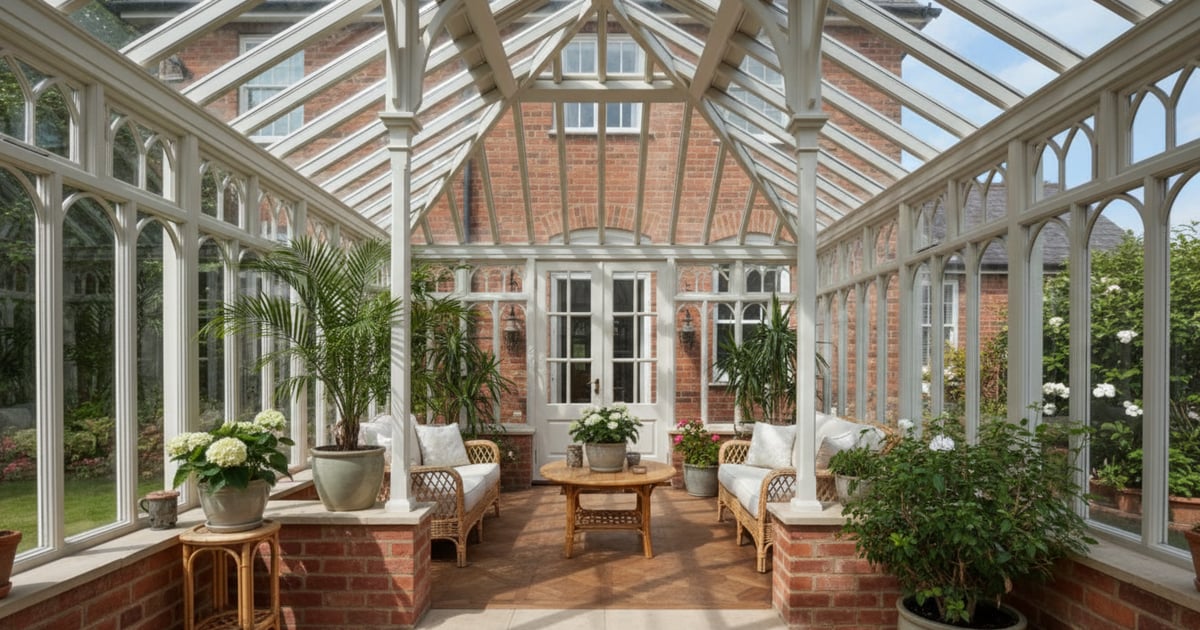
A conservatory or orangery adds light and extra space without the full cost of a brick extension. UK prices depend on size, style (lean-to, Victorian, orangery), frame and glazing type, and base work. This guide covers typical conservatory costs in 2026.
Most projects fall between £18,360 and £24,840. Budget refreshes start near £9,120; premium projects reach up to £56,700.
Two ways to take action on conservatory costs
Pick the path that fits where you are — running early numbers, or pressure-testing a quote you've already got.
Typical UK Cost by Scenario
Typical timeline: 2 to 6 weeksBudget
£13,200
typical figure
- Focused essentials
- Practical finishes
Mid-range
Most common£21,600
typical figure
- Balanced specification with core upgrades
- Reliable materials
Premium
£41,310
typical figure
- Premium materials
- Wider scope with higher coordination demands
Figures are typical UK averages including labour, materials, and VAT at 20% for standard-rated work.
Save money on your quote
Already got a quote from a builder?
Upload it and our AI Quote Checker flags overcharges, missing scope, and the questions worth asking — in about a minute.
Typical UK Cost Ranges for Conservatory
| Item | Cost Range |
|---|---|
| Lean-to conservatory (small) | £9,600 – £18,000 |
| Lean-to (medium) | £14,400 – £26,400 |
| Victorian/Edwardian style | £18,000 – £36,000 |
| Orangery | £24,000 – £54,000 |
| Base/foundations | £1,800 – £4,800 |
| Heating and electrics | £600 – £2,400 |
All prices are approximate UK averages including labour, materials, and VAT at 20% (2026). Some qualifying renovations for empty homes may use the reduced 5% VAT rate.
Mini conservatory cost calculator
Three quick inputs and we'll email you an indicative range. Run the full calculator for a postcode-adjusted estimate.
Real UK Cost Examples
- Budget scenario (3-bed semi, Birmingham): focused essentials and practical finishes. Not done: major layout or structural changes. Approx cost: £7,600 to £14,400.
- Mid-range scenario (typical homeowner, 3-bed terrace): balanced specification with core upgrades and reliable materials. Approx cost: £15,300 to £20,700.
- High-end scenario (4-bed detached): premium materials and wider scope with higher coordination demands. Main cost drivers: specification level and complexity. Approx cost: £21,600 to £47,250.
Related next steps:
What You Can Get For Your Budget
- Around £12,600: core refresh and essential upgrades, usually with no major layout change.
- Around £18,000: balanced refit scope with better materials and targeted performance improvements.
- £27,000+: wider flexibility on finish quality, scope depth, and more complex works.
Hidden Costs to Watch For
- Groundworks and thermal-spec upgrades can push costs beyond entry-level assumptions.
- Waste removal, making-good, and repeat trade visits are common late-budget increases.
- Compliance and certification items are often missing from initial summary quotes.
- In most UK projects, scope changes after works start are where costs escalate fastest.
Related next steps:
Should You Do This Renovation?
- Usually worth it when conservatory solves a clear usability, compliance, or energy-performance problem.
- Less worth it when the main issue is cosmetic and resale timing is short-term.
- ROI is strongest when scope is disciplined and specification matches local value levels.
Common Cost Mistakes
- Underestimating labour and preliminaries while focusing only on material prices.
- Changing scope mid-project without budget re-baselining.
- Choosing the cheapest quote without checking detailed inclusions and exclusions.
- Running too little contingency for hidden defects and compliance upgrades.
Key Cost Factors
- Size and shape — larger conservatories cost more; lean-to is usually cheapest.
- Frame — uPVC is most affordable; aluminium and timber cost more.
- Roof — polycarbonate is cheapest; glass and solid roof options cost more.
- Base — new foundations and dwarf walls add cost.
- Planning — some conservatories need planning permission; larger ones may not be permitted development.
- Location — London and the South East typically cost 15–25% more.
Cost Checkpoints
Use these checkpoints to sequence spend decisions, protect your core scope, and reduce late-stage budget overruns.
- Prioritise orangery first: typical range £24k to £54k can shift the whole project budget if scope changes late.
- Prioritise victorian/edwardian style next: typical range £18k to £36k can shift the whole project budget if scope changes late.
- Use £18k as a working midpoint and hold a contingency of roughly 10% to 15% for unknowns and making-good works.
- Request like-for-like quotes with labour, materials, and exclusions split out so you can compare options without hidden scope gaps.
5 line items every fair conservatory quote should include
Use this checklist to spot missing scope before you sign — each item names what should be priced and what to ask for if it isn't.
- 1
Base + foundations (often the hidden killer cost)
Conservatories need proper foundations. Trench-fill or raft foundations to Building Regs depth (typically 1m+ in clay, 600mm in stable ground). On older properties or sloping sites, this becomes the biggest line item.
Fair UK range: £1,500-£4,000 for typical base/foundation work; significantly more on sloping sites or poor ground.
Ask: What foundation type are you proposing, what depth, and have you done a site assessment?
- 2
Frame system — manufacturer, profile, BFRC rating
A fair quote names the frame manufacturer (Synseal, Eurocell, Liniar, Veka), the profile (e.g. Capricorn, Liniar Modus), and the BFRC energy rating. 'Premium uPVC double glazed' without spec is meaningless.
Fair UK range: Material costs vary by spec: budget profiles £2,000-£4,000; premium £4,000-£8,000 for typical conservatory.
Ask: Which manufacturer and profile system are you using, and what's the BFRC rating?
- 3
Roof type — polycarbonate, glass, or solid
Polycarbonate (cheapest, noisy in rain, poor thermal): £800-£1,500 typical roof. Glass (good light, better thermal, expensive): £2,500-£5,000. Solid/tiled (warm conservatory, looks like extension, requires Building Regs): £4,000-£12,000+. The roof type drives both cost and year-round usability.
Fair UK range: Polycarbonate £80-£150/m²; glass £200-£400/m²; solid roof £400-£800/m².
Ask: What roof type and material are you proposing, and what's the U-value rating?
- 4
Building Regs (if conservatory >30m² or has heating)
Most conservatories are exempt from Building Regs IF: floor area ≤30m², separated from house by external-quality door, no fixed heating system independent of house. If you want heating or solid roof, Building Regs apply (typically £400-£800).
Fair UK range: £0 if under 30m² and unheated and exempt; £400-£800 if Building Regs apply.
Ask: Is this conservatory exempt from Building Regs? If I add heating or use it year-round, what changes?
- 5
Internal works — flooring, decoration, electrics, doors
After the structure goes up, you need: flooring (tile, LVT, engineered wood), decoration of internal reveals where conservatory meets house, electrics (sockets, lighting — Part P notifiable), and the dividing door (must be external-quality if conservatory unheated for Building Regs exemption).
Fair UK range: £2,000-£5,000 for typical internal works on a 12m² conservatory.
Ask: Can you itemise the internal works — flooring, decoration, electrics, dividing door — separately?
Want this run on your actual conservatory quote? Upload it and our AI Quote Checker flags missing line items, overcharges and the questions worth asking.
7 red flags that mean you might be overcharged on a conservatory quote
UK-specific signals — each red flag explains why it matters and the question that surfaces the truth.
Door-to-house removed without proper external-quality replacement
Why it matters: If the dividing door between house and conservatory is removed (or replaced with internal-quality door), the conservatory becomes part of the heated house — triggering Building Regs Part L compliance. Most conservatories fail Part L. Removing the door without compliance work is illegal.
Ask: Will you maintain an external-quality dividing door, or are you doing the Building Regs work to make this part of the heated house?
Polycarbonate roof on a 'year-round' conservatory
Why it matters: Polycarbonate roofs make conservatories unusable in summer (overheats) and winter (cold, condensation). If a salesperson promises 'year-round use' with a polycarbonate roof, they're misleading you. Glass or solid roof for year-round; polycarbonate for occasional summer use only.
Ask: If I want year-round use, what roof type do you recommend? Polycarbonate isn't suitable.
No site survey or foundation assessment before quoting
Why it matters: Foundation costs vary 5x depending on ground conditions. A quote based on assumed foundations is meaningless — actual ground conditions can add £2,000-£8,000 to the project. Reputable installers do a trial pit or soil assessment before pricing.
Ask: Have you done a site survey including ground conditions? What's the contingency if foundations need to go deeper?
High-pressure sales tactics: 'today only' discounts
Why it matters: Conservatory installers (especially national chains: Anglian, Everest, Britelite) are notorious for inflating initial prices then offering 'today only' 50% discounts to pressure signing. The 'discounted' price is usually still 30% above local installer rates.
Ask: Can I take 2 weeks to compare quotes? If you say no, that's my answer.
No DGCOS or HIES membership offered
Why it matters: DGCOS (Double Glazing & Conservatory Ombudsman Scheme) and HIES provide insurance-backed guarantees and ombudsman services. Conservatory installers fail at higher-than-average rates. Without IBG, the warranty dies with the installer.
Ask: Are you a member of DGCOS or HIES? Is the warranty insurance-backed?
Quote bundles supply and fit without spec details
Why it matters: Conservatory pricing is opaque by design. Cheap installers bundle 'supply and fit £8,995' without specifying the frame system, roof, glazing, foundations. You can't compare quotes or know what you're getting.
Ask: Can you itemise: foundations, frame system (manufacturer/profile), roof type and material, glazing rating, internal works?
No Permitted Development check completed
Why it matters: Most conservatories are permitted development, but not all: front-of-house, conservation areas, listed buildings, sites with previous extensions all may need planning. A quote that hasn't done the PD check leaves you exposed to enforcement.
Ask: Have you confirmed this conservatory falls within Permitted Development limits for my property?
Spot a couple of these on your conservatory quote? Upload it for a full red-flag scan and fair-rate comparison.
How to negotiate a conservatory quote
A simple framework, a verbatim script you can paste into an email or text, and the topic-specific levers that move the price.
Framework
- 1Get three quotes from local installers (avoid national chains for first comparison — get their quote third for benchmarking). Specify: same floor area, same style, same roof type and glazing rating, same heating intent. Without identical scope, comparison is impossible.
- 2Demand itemised quotes covering: foundations, frame (named manufacturer/profile), roof (type + material + U-value), glazing rating, internal works, dividing door, IBG warranty. Reject 'supply and fit' single-total quotes.
- 3Identify the median per major line. The total spread on conservatories is usually 40-80% — much of it markup. The line-item spread tells you which installer is bulk-discounted vs marked up.
- 4Approach your preferred installer (chase DGCOS membership and recent local references over lowest price). Ask them to match the median on individual lines. Confirm Building Regs treatment in writing before signing.
Verbatim script
I've had three quotes for this conservatory. Yours is competitive overall, but the foundations and frame lines are £X above the median I've received from two other DGCOS-registered installers. The other quotes specify [frame manufacturer/profile] with [BFRC rating]. Can you walk me through what's in your foundation and frame pricing, confirm the spec is comparable, and is the warranty insurance-backed?
Topic-specific levers
- Avoid national chains: Anglian, Everest, Britelite typically charge 50-100% more than equivalent local DGCOS installers using the same frame profiles. Get a local quote first to know the fair price.
- Roof upgrade: solid (tiled) roof costs £3,000-£8,000 more than glass but creates a year-round room. Polycarbonate is false economy for year-round use.
- Self-supplied internal finishes: source flooring, paint, soft furnishings yourself. Saves 20-30% over installer markup.
- Off-season scheduling: November-February, conservatory installers are quieter. 10-20% discount common for flexible dates.
- Combine with EWI or rendering: if doing exterior work anyway, conservatory base/foundation work can be coordinated with main contractor for shared mobilisation cost.
Want to know which line items on your conservatory quote are above market before you negotiate? Upload it for a fair-rate comparison.
10 questions to ask before hiring a conservatory installer
Vet on competence, insurance, paperwork and process — not price alone. Each question spells out the answer you want and why.
1. Are you a member of DGCOS (Double Glazing & Conservatory Ombudsman Scheme)?
Why it matters: DGCOS provides ombudsman services, deposit protection, and IBG. Conservatory installers fail at higher-than-average rates — DGCOS membership is the strongest UK consumer protection signal.
2. Are you also a member of GGF (Glass and Glazing Federation)?
Why it matters: GGF membership requires assessed competence and provides additional consumer protection. Combined with DGCOS, it's a strong dual signal.
3. Can you show me 2-3 recent local conservatory installs (last 12 months) with homeowner contact details?
Why it matters: Conservatory issues (leaks, condensation, overheating) typically appear at 6-18 months. Local references let you visit installs and ask homeowners about post-install experience.
4. Which frame manufacturer and roof system do you propose?
Why it matters: Frame brand (Synseal, Eurocell, Liniar) and roof system (Ultraframe, Atlas, Guardian) are concrete spec items. Vague 'premium uPVC' answers mean the installer is hedging.
5. Is the installation warranty insurance-backed (IBG)?
Why it matters: IBG (via DGCOS or similar) means the warranty survives if the installer goes bust — common in this trade. Non-IBG warranties are worthless after installer failure.
6. Have you done a site assessment including ground conditions?
Why it matters: Foundations are the biggest cost surprise. A reputable installer assesses ground conditions before quoting. 'I'll just price a standard foundation' means contingency for poor ground hits you mid-job.
7. What's the Building Regs status of this conservatory — exempt or full application?
Why it matters: Most conservatories are Building Regs exempt IF kept separate from heated house and ≤30m². Solid roofs, heating, or removing dividing door triggers Part L compliance — major scope change.
8. What's your payment schedule, and what's the deposit?
Why it matters: Industry norm: 10-25% deposit, balance on completion. Anything over 25% upfront is a structural risk in this volatile trade.
9. Are you VAT registered, and will you provide a proper invoice?
Why it matters: VAT registration matters for warranty enforcement and IBG eligibility. Cash-only or no-invoice arrangements forfeit consumer protection.
10. Do you carry public liability insurance, and at what level?
Why it matters: £2M minimum public liability is industry norm. Conservatory work involves access at height, glass handling, and damage to existing property — liability cover protects you.
Already chosen a conservatory installer and got a quote? Run it through our Quote Checker before you commit.
Typical Timeline
| Item | Duration |
|---|---|
| Small lean-to | 2 to 3 weeks |
| Medium conservatory | 3 to 5 weeks |
| Orangery | 4 to 6 weeks |
Regional Cost Variations
Conservatory prices in London and the South East are typically 15–25% higher than national averages.
Costs in your area
Compare regional benchmarks for conservatory using the same UK baseline assumptions.
Ways to Reduce Costs
- Choose a simple lean-to design for the best value.
- uPVC frames are cheaper than aluminium or timber.
- Check permitted development limits to avoid planning fees.
- Get at least three quotes and compare like-for-like specs.
Ready to act on your conservatory project?
Whether you're still scoping or already comparing builders, the next step is one click away.