Loft Insulation Cost UK
Get YOUR loft insulation cost in 60 seconds — or check an existing quote against fair UK rates and ECO4 grant eligibility.
Estimates based on UK trade benchmark data, updated 2 May 2026. Methodology →
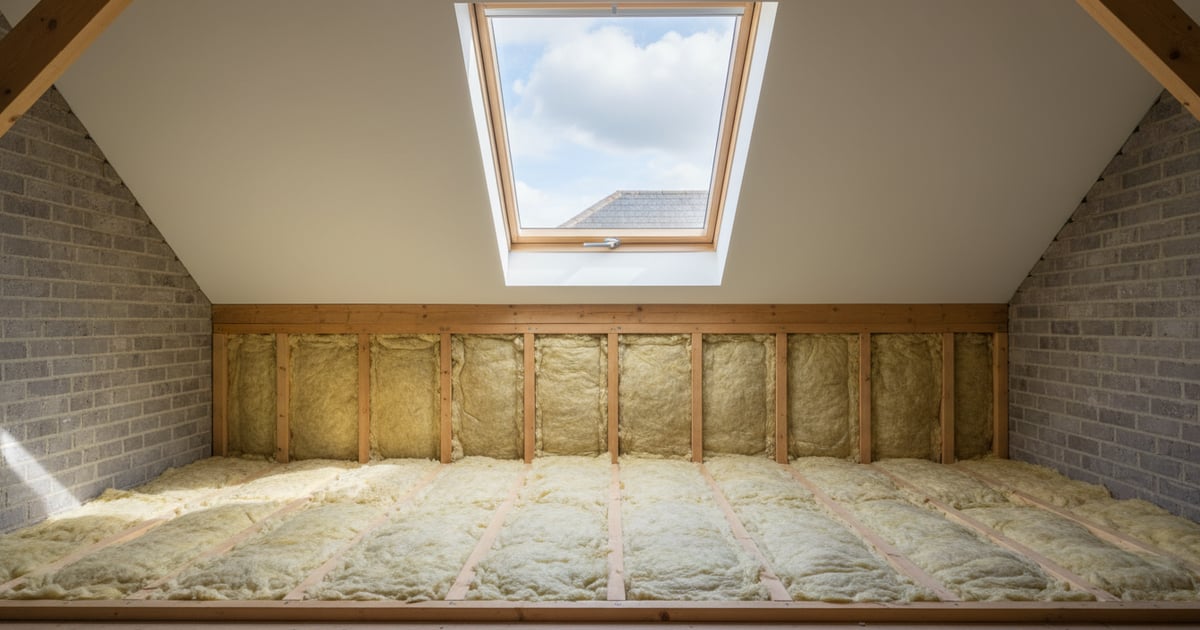
Loft insulation is one of the most cost-effective ways to reduce heat loss and cut energy bills. Whether you're topping up to 270mm, insulating from scratch, or combining insulation with boarding for storage, UK costs stay relatively modest and payback is often a few years. This guide covers typical loft insulation prices in 2026 and what changes the quote.
Most projects fall between £510 and £690. Budget refreshes start near £228; premium projects reach up to £1,890.
Two ways to take action on loft insulation costs
Pick the path that fits where you are — running early numbers, or pressure-testing a quote you've already got.
Typical UK Cost by Scenario
Typical timeline: Half to 1 dayBudget
£354
typical figure
- Focused essentials
- Practical finishes
Mid-range
Most common£600
typical figure
- Balanced specification with core upgrades
- Reliable materials
Premium
£1,306
typical figure
- Premium materials
- Wider scope with higher coordination demands
Figures are typical UK averages including labour, materials, and VAT at 20% for standard-rated work.
Save money on your quote
Already got a quote from a builder?
Upload it and our AI Quote Checker flags overcharges, missing scope, and the questions worth asking — in about a minute.
Typical UK Cost Ranges for Loft Insulation
| Item | Cost Range |
|---|---|
| DIY roll insulation (typical loft) | £240 – £540 |
| Professional installation (roll) | £420 – £840 |
| Blown fibre insulation | £480 – £1,080 |
| Loft boarding (per m²) | £30 – £66 |
| Insulation + boarding (small loft) | £600 – £1,440 |
| Flat roof insulation | £36 – £84 |
All prices are approximate UK averages including labour, materials, and VAT at 20% (2026). Some qualifying renovations for empty homes may use the reduced 5% VAT rate.
Mini loft insulation cost calculator
Three quick inputs and we'll email you an indicative range. Run the full calculator for a postcode-adjusted estimate.
Real UK Cost Examples
- Budget scenario (4-bed detached, Glasgow): focused essentials and practical finishes. Not done: major layout or structural changes. Approx cost: £190 to £400.
- Mid-range scenario (typical homeowner, bungalow): balanced specification with core upgrades and reliable materials. Approx cost: £425 to £575.
- High-end scenario (2-bed flat): premium materials and wider scope with higher coordination demands. Main cost drivers: specification level and complexity. Approx cost: £600 to £1,575.
Related next steps:
What You Can Get For Your Budget
- Around £350: core refresh and essential upgrades, usually with no major layout change.
- Around £500: balanced refit scope with better materials and targeted performance improvements.
- £750+: wider flexibility on finish quality, scope depth, and more complex works.
Hidden Costs to Watch For
- Ventilation upgrades are often needed alongside insulation to avoid moisture risk.
- Waste removal, making-good, and repeat trade visits are common late-budget increases.
- Compliance and certification items are often missing from initial summary quotes.
- In most UK projects, scope changes after works start are where costs escalate fastest.
Related next steps:
Should You Do This Renovation?
- Usually worth it when loft insulation solves a clear usability, compliance, or energy-performance problem.
- Less worth it when the main issue is cosmetic and resale timing is short-term.
- ROI is strongest when scope is disciplined and specification matches local value levels.
Common Cost Mistakes
- Underestimating labour and preliminaries while focusing only on material prices.
- Changing scope mid-project without budget re-baselining.
- Choosing the cheapest quote without checking detailed inclusions and exclusions.
- Running too little contingency for hidden defects and compliance upgrades.
Key Cost Factors
- Loft size and access — easy access lofts are cheaper to insulate.
- Current insulation — topping up is cheaper than full install.
- Target depth — 270mm is recommended; more depth costs more.
- Boarding for storage — adds cost but makes loft usable.
- Blown vs roll — blown suits awkward spaces; roll is often cheaper.
Cost Checkpoints
Use these checkpoints to sequence spend decisions, protect your core scope, and reduce late-stage budget overruns.
- Prioritise insulation + boarding (small loft) first: typical range £600 to £1.4k can shift the whole project budget if scope changes late.
- Prioritise blown fibre insulation next: typical range £480 to £1.1k can shift the whole project budget if scope changes late.
- Use £500 as a working midpoint and hold a contingency of roughly 10% to 15% for unknowns and making-good works.
- Request like-for-like quotes with labour, materials, and exclusions split out so you can compare options without hidden scope gaps.
5 line items every fair loft insulation quote should include
Use this checklist to spot missing scope before you sign — each item names what should be priced and what to ask for if it isn't.
- 1
Pre-install survey: existing depth, ventilation and condition check
A fair quote starts with someone going up into the loft and measuring what's already there, checking eaves ventilation paths, and looking for damp, vermin droppings or old vermiculite (potential asbestos in pre-1985 properties). Quotes priced over the phone without a survey are guessing.
Fair UK range: Free to £75 for a survey, usually deducted from the install price if you proceed.
Ask: Will you carry out a physical loft survey before quoting, and will you photograph what's already up there?
- 2
Insulation product — brand, type and depth specification
BBA-approved is the baseline — Knauf Loft Roll 44, Isover Spacesaver and Rockwool RollBatt are the common BBA-certified mineral wool options. Building Regs Part L1B requires 270mm total depth for new installs (typically 100mm between joists + 170mm cross-laid over). Cheap quotes often skimp on cross-layer depth.
Fair UK range: £8–£14 per m² for BBA-approved mineral wool to 270mm. Blown cellulose £15–£22 per m².
Ask: Which BBA-approved product and what total finished depth in mm — between joists and cross-laid?
- 3
Eaves ventilation — soffit vents or rafter trays
If you stuff insulation right into the eaves you block the airflow that keeps the roof timbers dry. Rotten rafters in 5 years cost more than the insulation saved. Reputable installers fit rafter trays (also called eaves baffles) or check existing soffit vents are clear.
Fair UK range: £3–£6 per linear metre of eaves for rafter trays; soffit vent retrofit £15–£30 per vent.
Ask: How are you maintaining the 25mm minimum eaves ventilation gap, and is that itemised?
- 4
Loft boarding (if specified) — raised on legs above insulation
Boarding directly on joists crushes 270mm insulation down to 100mm and wipes out most of the thermal benefit. Proper job uses LoftZone StoreFloor, LoftLeg or similar raised-board systems. Skipping this is the single most common cost-cutting trick in cheap quotes.
Fair UK range: £25–£45 per m² for boarding on raised legs over insulation, supply and fit.
Ask: Will boarding sit on raised legs above the full 270mm depth, and which system are you specifying?
- 5
Hatch upgrade, electrics safety and waste removal
Old hinged hatches are uninsulated weak spots — quotes should include either insulating the existing hatch or fitting an insulated drop-down ladder. Downlighters that pierce the ceiling need fire-rated covers (loft caps) before insulation goes over them or you create a fire risk and a Building Regs failure.
Fair UK range: £60–£180 for hatch insulation; £8–£15 per downlighter for fire-rated loft caps; £40–£90 for waste removal.
Ask: Is hatch insulation, downlighter fire-rated covers, and waste/old-insulation removal itemised in this quote?
Want this run on your actual loft insulation quote? Upload it and our AI Quote Checker flags missing line items, overcharges and the questions worth asking.
7 red flags that mean you might be overcharged on a loft insulation quote
UK-specific signals — each red flag explains why it matters and the question that surfaces the truth.
Quote given over the phone with no physical loft inspection
Why it matters: Without seeing what's already up there — depth, condition, eaves ventilation, vermiculite, downlighters — they're guessing. The 'extras' will appear on day one when reality differs from assumption.
Ask: Can you come and physically inspect the loft before quoting, even if there's a small survey fee?
No mention of BBA approval or product brand on the materials line
Why it matters: BBA (British Board of Agrément) certification is the basic UK standard for insulation products. Generic 'mineral wool' could be anything — including non-certified imports that don't meet Building Regs Part L thermal performance.
Ask: Which exact BBA-approved product are you using, and can you put the certificate number on the quote?
Total depth quoted under 270mm without a written reason
Why it matters: Building Regs Part L1B requires 270mm minimum for new installs. Anything less needs justification (e.g., insufficient roof void). 200mm at the cheap-quote end is just skimping on materials and underperforms thermally for 30+ years.
Ask: What total finished depth in mm, and if it's under 270mm, what's the Part L compliance reason?
Boarding included but no mention of raised legs or LoftZone-type system
Why it matters: Direct-to-joist boarding compresses insulation down to joist depth (typically 100mm), losing 60% of the thermal value. The whole job becomes a waste of money — and you'll never know until the energy bills don't drop.
Ask: Will the boarding sit on raised legs/loft stilts above the full insulation depth — which system are you using?
'Lifetime warranty' offered with no underwriting insurance backing
Why it matters: A lifetime warranty from a small installer is worthless if they cease trading in year three — which most do. The only enforceable warranty is one underwritten by an insurance-backed scheme (NIA, IAA, GGFi).
Ask: Is the workmanship warranty insurance-backed, and through which scheme — can I see the certificate?
ECO4 eligibility never raised even though you mentioned benefits or low income
Why it matters: ECO4 grants can fully fund loft insulation for eligible households (means-tested benefits, low-income with EPC D-G). A quoting installer should at minimum check eligibility and offer to assess. Skipping it usually means they don't have ECO4 accreditation.
Ask: Are you ECO4-accredited, and can you check whether my household qualifies for grant funding?
No mention of downlighters, vermiculite or asbestos check on pre-1985 property
Why it matters: Old vermiculite insulation can contain asbestos. Recessed downlighters become fire risks if buried in fibre without fire-rated covers. Both are legal and safety issues — a quote that ignores them is hiding cost or risk.
Ask: Have you checked for vermiculite/asbestos and downlighters, and are fire-rated loft caps included for any spotlights?
Spot a couple of these on your loft insulation quote? Upload it for a full red-flag scan and fair-rate comparison.
How to negotiate a loft insulation quote
A simple framework, a verbatim script you can paste into an email or text, and the topic-specific levers that move the price.
Framework
- 1Get three quotes against the same written scope: same loft area in m², same finished depth in mm (270mm minimum), same BBA-approved product family, same boarding spec (raised vs direct), same eaves ventilation approach.
- 2Before chasing price, run the ECO4 check: if you receive any means-tested benefit or have an EPC of D-G with low income, the install may be fully grant-funded — that beats any negotiation.
- 3Compare the materials line and the boarding line separately. Materials should be £8–£14/m² for BBA mineral wool to 270mm; boarding on raised legs £25–£45/m². Big spreads usually mean a lower spec hidden in a higher-looking number.
- 4Go to your preferred installer (NIA member with insurance-backed warranty preferred) and ask them to match the median on whichever single line is highest, holding spec constant.
Verbatim script
I've got three quotes for 270mm BBA-approved loft insulation across [X] m² with raised-leg boarding over the storage area. Yours is competitive on labour but £[X] above the median on the materials and boarding lines combined. The other two are quoting [Knauf Loft Roll 44 / Isover Spacesaver] with the same finished depth and a LoftZone-type raised system. Can you walk me through what justifies the difference, or match the median if it's the same spec? And can you confirm whether my household qualifies for ECO4 — that'd change the whole conversation.
Topic-specific levers
- ECO4 grant route: if eligible, the install is free or heavily subsidised — never negotiate price before checking. Eligibility includes Pension Credit, Universal Credit, Income Support, EPC D-G with household income under £31,000 (LA Flex routes vary).
- DIY top-up with pro install for tricky bits: rolling out 170mm cross-layer over existing 100mm is genuinely DIY-able if access is good. Pay an installer only for boarding, eaves baffles and hatch — typically saves 35–50%.
- Boarding scope reduction: full-loft boarding is rarely needed. Boarding a 6m² area around the hatch covers 90% of real-world storage use at 30% of the cost.
- Mid-week or off-season scheduling: insulation installers are slammed Sept–Feb (heating-bill season). January–March quotes are typically 10–15% cheaper than September–November.
- Bundled with a connected job: if you're also having a survey for solar, heat pump or a new boiler, ask the same firm or related contractor — they'll often discount insulation 10–20% to win the larger work.
Want to know which line items on your loft insulation quote are above market before you negotiate? Upload it for a fair-rate comparison.
10 questions to ask before hiring a insulation installer
Vet on competence, insurance, paperwork and process — not price alone. Each question spells out the answer you want and why.
1. Are you a member of the NIA (National Insulation Association)?
Why it matters: NIA membership requires insurance evidence, code of conduct adherence and competency standards. Not the only quality signal, but absence + no other accreditation (CIGA, BBA-installer scheme) is a yellow flag.
2. Are the products you install BBA-approved, and will you provide the certificate numbers on the quote?
Why it matters: BBA approval is the UK standard for insulation thermal performance and durability claims. Non-BBA products may not meet Building Regs Part L1B and the manufacturer warranty often won't survive an installer dispute.
3. Are you ECO4-accredited, and can you assess my household's grant eligibility before I commit?
Why it matters: ECO4 can fully fund insulation for benefits recipients and low-income households with EPC D-G. Non-accredited installers can't deliver the grant — going elsewhere may save you 100% of the cost.
4. How will you maintain the 25mm eaves ventilation gap — rafter trays, soffit vents, or both?
Why it matters: Blocked eaves cause condensation and rotten rafters. A reputable installer has a clear answer; vagueness or 'don't worry about that' is how roofs get destroyed slowly over 5–10 years.
5. What total finished insulation depth in mm, and how is that split between between-joist and cross-laid?
Why it matters: Building Regs Part L1B targets 270mm total. A typical correct answer: 100mm between 100mm joists + 170mm cross-laid perpendicular. Anything less without a structural reason is underspec.
6. If I want loft boarding, do you fit it on raised legs (LoftZone, LoftLeg or similar) above the full insulation depth?
Why it matters: Direct-to-joist boarding crushes insulation and ruins the thermal benefit. If they don't know what raised-leg systems are, they shouldn't be quoting insulation + boarding combined.
7. How do you handle recessed downlighters or vermiculite found in older lofts?
Why it matters: Downlighters need fire-rated covers (loft caps) before insulation goes over — otherwise it's a fire risk and Part B failure. Vermiculite in pre-1985 lofts may contain asbestos and needs testing before disturbance.
8. Is your workmanship warranty insurance-backed, and through which scheme?
Why it matters: Verbal 'lifetime warranty' from a sole trader is worth nothing if they go bust. Insurance-backed warranties (CIGA, GDGN, IAA) survive the installer's failure and are the only enforceable kind.
9. Can you provide 2–3 references from loft jobs in the last 6 months in this region?
Why it matters: Recent local references let you ring real customers and ask: did you get the depth quoted, is your loft hatch insulated, did they sort eaves ventilation, would you use them again.
10. What's your payment schedule and are you VAT registered?
Why it matters: UK norm: small deposit (10–20%) on confirmation, balance on completion. ECO4 grant work is usually zero-deposit. Anything over 30% upfront before materials are on site is a structural risk. VAT registration matters for warranty enforcement.
Already chosen a insulation installer and got a quote? Run it through our Quote Checker before you commit.
Typical Timeline
| Item | Duration |
|---|---|
| Small loft (roll) | Half day |
| Average loft (roll) | 1 day |
| Blown insulation | Half to 1 day |
Regional Cost Variations
Material costs are similar across the UK. Labour may be 10–20% higher in London and the South East.
Costs in your area
Compare regional benchmarks for loft insulation using the same UK baseline assumptions.
Ways to Reduce Costs
- Check if you qualify for free or subsidised loft insulation under ECO or other schemes.
- Top up to 270mm if you have less — big savings for modest cost.
- Don't squash insulation with boarding; use raised boards or legs.
- DIY roll installation is achievable if access is good and you don't need boarding.
Ready to act on your loft insulation project?
Whether you're still scoping or already comparing builders, the next step is one click away.